
The planning essentials
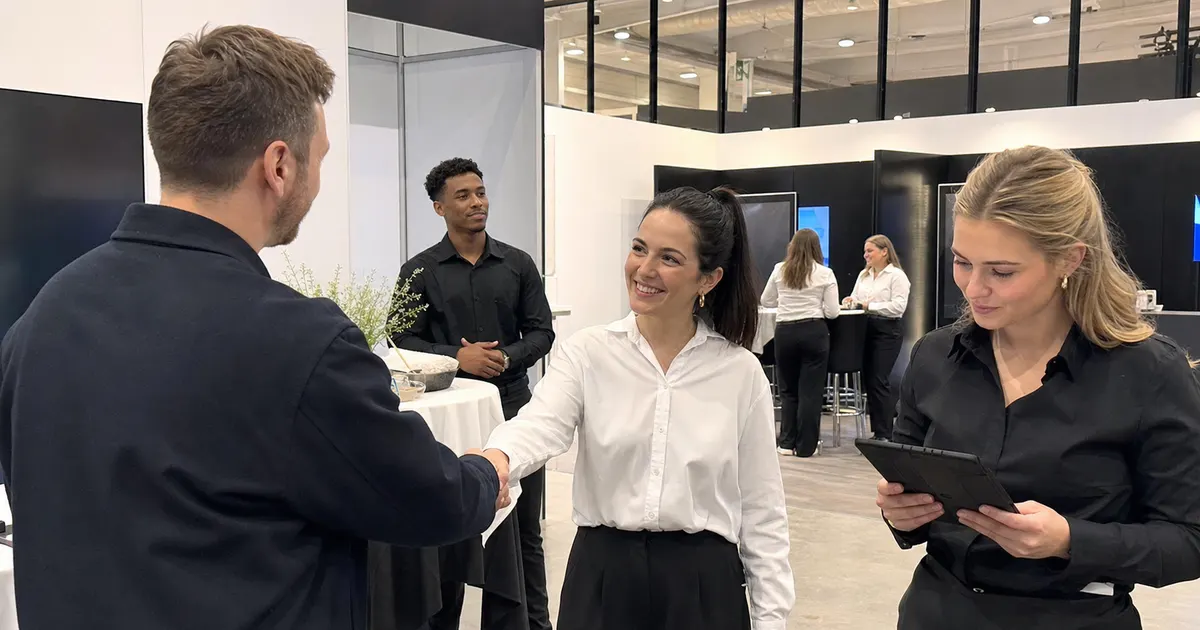
A booth brief should help trade show staff open relevant conversations, orient visitors and route questions without turning hosts into salespeople or product experts. Put the booth purpose, audiences, zones, approved messages, demonstration boundaries, contacts, opening routine and closing routine in one concise format, then rehearse practical examples of when the team should hand a conversation to a specialist.
Brief the real booth, not a generic brand story
Booth staff work within a specific physical and commercial environment. Start with the purpose of this Copenhagen appearance, the intended visitor journey and the actions staff support. Corporate background can provide context, but it does not tell a host whether a visitor needs a short introduction, a demonstration or a conversation with a named specialist.
State what success does not require from temporary staff. If hosts should not negotiate, advise on specialist questions or operate technical equipment, put that boundary in writing. They can then make a confident handoff instead of inventing an answer to appear helpful. The exhibitor's own product and sales team retains conversations that require its expertise and authority.
Draw the visitor path through the booth
Use a simple journey from eye contact to a natural close. Where can a host open a conversation without obstructing the aisle? Which question clarifies interest? Where is the relevant colleague, and how should the exchange end when the offer is not a fit? The journey must respect the booth's physical design and the organiser's event rules.
Divide the booth into functional zones such as welcome, conversation, demonstration, materials and internal storage. Venue and organiser boundaries still apply; staff should not move activity into shared aisles on their own initiative. Named zones give the team precise language, making a message such as ‘the specialist is available beside the demo’ immediately actionable.
Provide a message hierarchy rather than a script to recite
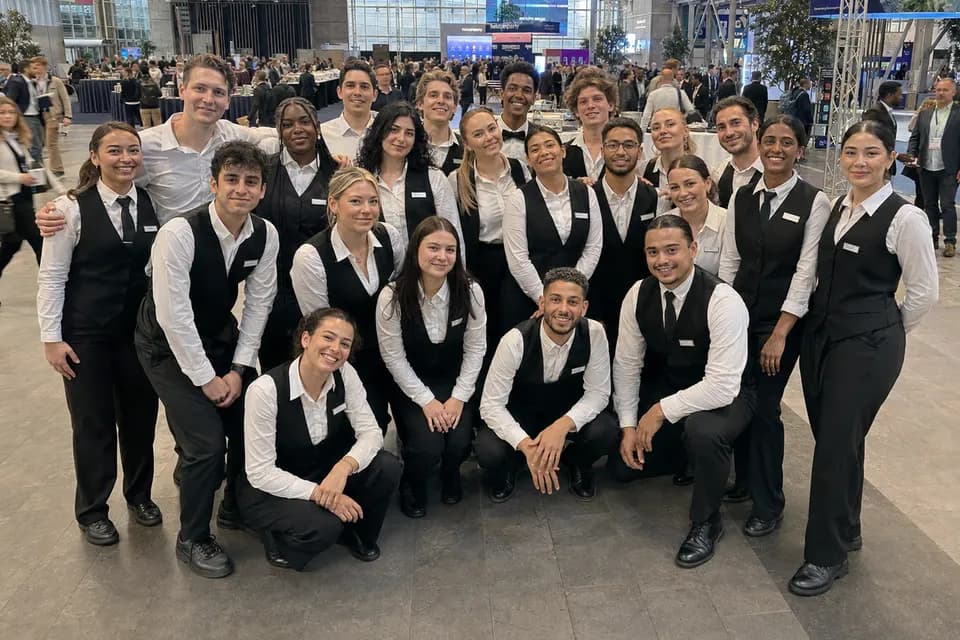
A hierarchy allows the host to adjust length without changing meaning. Begin with a plain identification of the company and why the booth may be relevant. Add a small set of approved explanations about the problems or work areas the offer addresses. Detailed evidence and technical discussion remain with the exhibitor employees assigned to those conversations.
List words or claims that staff must avoid where they could create the wrong expectation. Hosts need a professional way to say they will involve the right specialist. Include approved transition phrases in English and Danish if the visitor mix requires them, so confidence in a second working language does not accidentally produce stronger product claims than the exhibitor approved.
Define the handoff into the exhibitor team
Show which conversations belong with sales, product, press, partnerships or another named function. Use observable cues rather than a vague instruction to identify ‘good leads’. A visitor might ask about implementation, an existing agreement or a partnership. The host confirms the need and connects the person without trying to perform the specialist role.
Agree a visible availability signal and a fallback when the relevant colleague is occupied. A host may offer approved material or the agreed follow-up route, but should not promise a meeting or answer on behalf of somebody who has not accepted it. Detailed lead capture belongs to a separate, approved lead-flow process rather than this role brief.
The core fields of a booth brief
The exhibitor validates content, roles and boundaries for the specific show.
- Purpose and visitor path
- Describe the desired action from first contact to close or handoff.
- Zones and owners
- Attach welcome, conversation, demo and materials to named functions.
- Messages and limits
- List approved explanations, wording to avoid and when a specialist takes over.
- Availability
- Show how hosts know who is free and what fallback applies.
- Operations and escalation
- Combine access, shifts, communication and the stop route for exceptions.
Walk through demonstrations and materials with firm boundaries
If hosts may perform a simple approved demonstration, define its starting state, permitted steps, close and support contact. If the demo requires a specialist, the host should introduce its purpose and bring that person in. ‘Try things until it works’ is not an instruction; it shifts product and operational responsibility to somebody without the necessary preparation.
Give all materials an owner and replenishment route. Show what may be distributed, to which audience and in which language. Remove retired versions from the booth. Staff should never decide between near-identical documents while a visitor waits. The exhibitor needs to settle that approval before opening and provide one recognisable source of current material.
Plan energy, breaks and coverage from the actual booth
Staffing depends on booth size, role mix, opening hours, expected traffic, languages and the presence of the exhibitor's own employees. Avoid treating one generic headcount ratio as a standard. Define which functions need continuity and which can pause during a changeover. The useful staffing question concerns the tasks and moments the booth must cover.
Build breaks into the real shift structure under the booth lead's coordination. Each host should know who receives the zone, materials and any open conversation. A changeover is not merely a new name appearing on a rota; it is a short transfer of the current state. That rhythm supports a long exhibition day better than assuming uninterrupted energy.
Decision summary: brief the actual booth
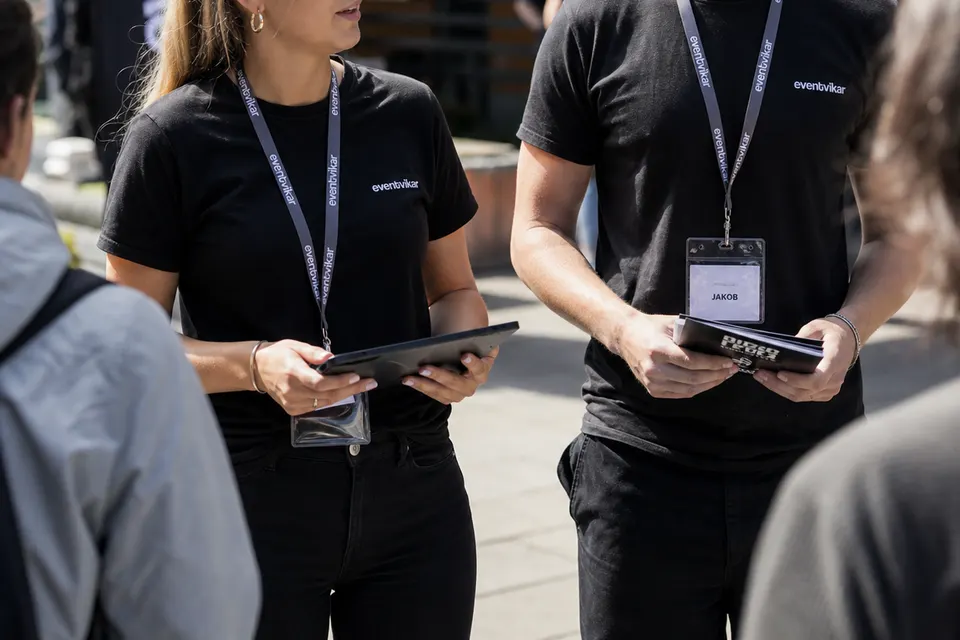
Use this summary to combine visitor flow, messages and handoffs in a usable booth briefing. Adapt instructions to the exhibitor team, demonstrations and venue requirements. Confirm the final choice in the shared live brief before the team follows it.
- Visitor journey: Describe how a visitor is welcomed, oriented and passed onward without pressure to continue the conversation.
- Messages: Prioritise a few approved messages and define which questions belong with the exhibitor's specialists.
- Operations: Bring access, materials, demonstration boundaries, breaks and escalation contacts into the live brief.
Planning questions
Should booth staff memorise a fixed script?
A message hierarchy and approved phrases may be more usable than a long script. Allow staff to ask questions, acknowledge uncertainty and close a conversation respectfully.
Who should handle product-specific questions?
Name the exhibitor function that owns product, pricing or contract statements. Booth staff can identify the need and make a clear handoff without improvising an answer.
How should we plan break coverage at the booth?
Map concurrent service points and agree which must remain covered. Plan a handover before each break and adjust to observed flow rather than using a universal staffing ratio.
Sources
- Danish Working Environment Authority: Systematisk arbejdsmiljøarbejde
The limited statement about employer planning, instruction and supervision responsibilities.
This is planning guidance. The exhibitor, employer, venue and relevant suppliers must validate the actual booth, product information, instruction, access and allocation of responsibility.