
The planning essentials
Staffing for a company party depends on the service format's actual workflow. A reception creates different touchpoints from a buffet or seated dinner, so map arrival, service, bar boundaries, clearing, programme transitions and handback as separate deliverables. Divide ownership between the company, venue, caterer and staffing team, then assess which roles and working windows the specific corporate event requires.
Choose the service format before selecting roles
A reception, buffet and served dinner use staff differently. Reception work centres on arrival, live service points, clearing and guest direction. A buffet connects replenishment, guest movement, tables and used service. Dinner links the floor more tightly with kitchen or catering timing. Begin with the real corporate guest journey rather than selecting job titles in isolation.
A company event may change format during the evening, and those transitions create concentrated work. State the signal that closes reception, opens the buffet, starts dinner or changes the bar operation. Staff must know which earlier deliverable stops before a new priority is added. Otherwise every service mode remains active in the plan even when the physical setup has moved on.
Map the deliverables guests should experience
Describe visible outcomes instead of relying only on titles. The welcome point follows the company's approved plan; glassware and service move through defined points; tables reset to the service description; questions reach a named corporate host. Clear deliverables let EventVikar and the other suppliers understand the profile and instruction that the actual work demands.
Include work behind the guest surface: materials, venue-approved waste and return points, replenishment, internal movement and final handback. Avoid calling all of this ‘runner work’. A runner may serve several routes, but each route needs an origin, receiver, priority and contact so different suppliers do not create competing orders.
Reception needs fast orientation and light handoffs
At a corporate reception, colleagues, clients and partners often arrive with different knowledge of the programme and venue. The host role should have brief approved answers to common practical questions and a clear route to the company's own event lead. Staff need the boundary between giving direction and making a decision about access or an invitation.
Plan clearing and replenishment so host and service roles do not all leave their primary zones at once. If one person later changes function, use a controlled handover. Clothing, tools, contact and work point may change. A different title appearing on the schedule is not by itself sufficient instruction for a materially different task.
Buffet delivery works through owned service points
Buffet flow depends on menu, layout, available space, replenishment route, plate point and the caterer's working method. It cannot be reduced to one universal headcount. Assign owners to the buffet itself, guest area, clearing, replenishment and caterer communication. The responsible supplier defines food and service instruction; event staff follow the validated practical role.
Agree how staff report an empty station, spill, queue or changed movement without redesigning the area themselves. The relevant owner decides whether to replenish, use an approved alternative route or pause. A compact message structure lets the team respond precisely without several people abandoning their own zone for the same visible issue.
Company-party format matrix
Use this matrix to expose concurrent deliverables; it is not a standard staffing ratio.
- Reception
- Map welcome, direction, light service, clearing and handoff to the corporate host.
- Buffet
- Assign buffet point, guest area, replenishment, clearing and caterer communication.
- Dinner
- Connect table zones, service phases, kitchen contact, return flow and programme signals.
- Bar
- Define menu, stock, glassware, responsible lead and runner handover.
- Transitions
- State what stops, who releases the change and which roles move function.
Dinner needs one shared service description
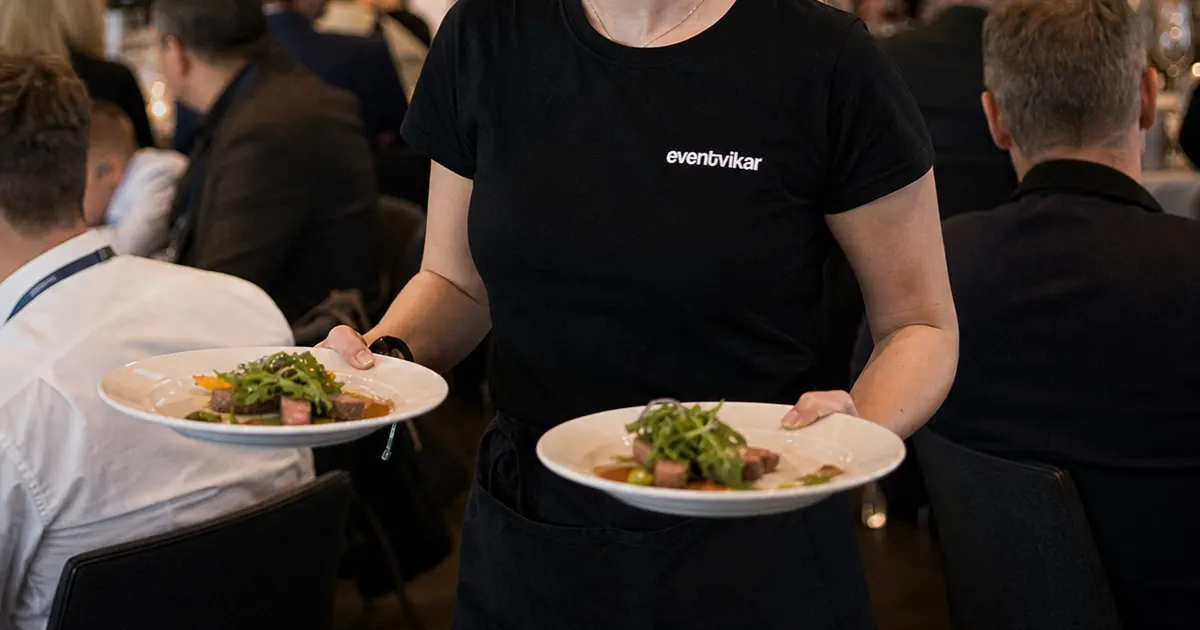
For a served corporate dinner, catering or kitchen should define the sequence, collection point, table plan, approved special markers and return flow. The floor lead translates this into service zones and communications. EventVikar personnel should not guess dishes, alter the seating plan or make kitchen decisions when the necessary information has not been provided.
Review the beginning and close of each service phase. Who gives the signal, who may pause and how is a variance reported? If speeches or programme items change timing, the company event lead should align the decision with catering and venue. Floor staff receive one confirmed priority rather than several direct requests from individual tables.
Plan the bar as its own operating interface
The bar has its own stock flow, glass flow, menu, payment or recording method and responsible lead. State who owns range, replenishment, changes and guest questions outside the approved service. Service and runner roles can support defined handover points, but should not receive competing direct orders from several bartenders across the workspace.
Where people move between bar and other service work, the employer and relevant lead must confirm competence, instruction and the new task. The Danish Working Environment Authority describes employers' responsibilities to plan, instruct and supervise work. A flexible company-party rota does not replace that assessment when the workplace, equipment or role changes.

Decision summary: choose the service format first
Use this summary to clarify the company event's service format and concurrent deliverables. Agree actual roles, competence boundaries and supplier responsibilities for the event. Confirm the final choice in the shared live brief before the team follows it.
- Format: Choose reception, buffet, dinner or a clear combination and describe the intended guest service journey.
- Service points: Map concurrent points such as arrival, cloakroom, buffet, table service and bar, each with an owner.
- Handoffs: Agree transitions between venue, catering, bar, event crew and the company's internal host function.
Planning questions
Can one brief cover reception, buffet and dinner?
Use a shared structure, but adapt deliverables, signals and handoffs to each format. A combined event should show where roles change between phases.
How should we decide where crew are positioned?
Draw the guest journey and mark concurrent service points, possible queues and supplier interfaces. Decide positioning and coverage from the actual setup.
Who owns problems at the buffet or bar?
Name the owner in the plan according to task and contractual boundary. Crew can observe and escalate but should not assume a supplier's decision responsibility.
Sources
- Danish Working Environment Authority: Systematisk arbejdsmiljøarbejde
The limited statement about employer planning, instruction and supervision when roles change.
This is planning guidance, not a staffing ratio or safety standard. The company, employer, venue, caterer and other suppliers must validate the actual format, tasks, instruction and responsibility.